- Home
- Warehousing
- Transloading
Transloading
Your cargo keeps moving inland while the ocean container goes straight back to the port.
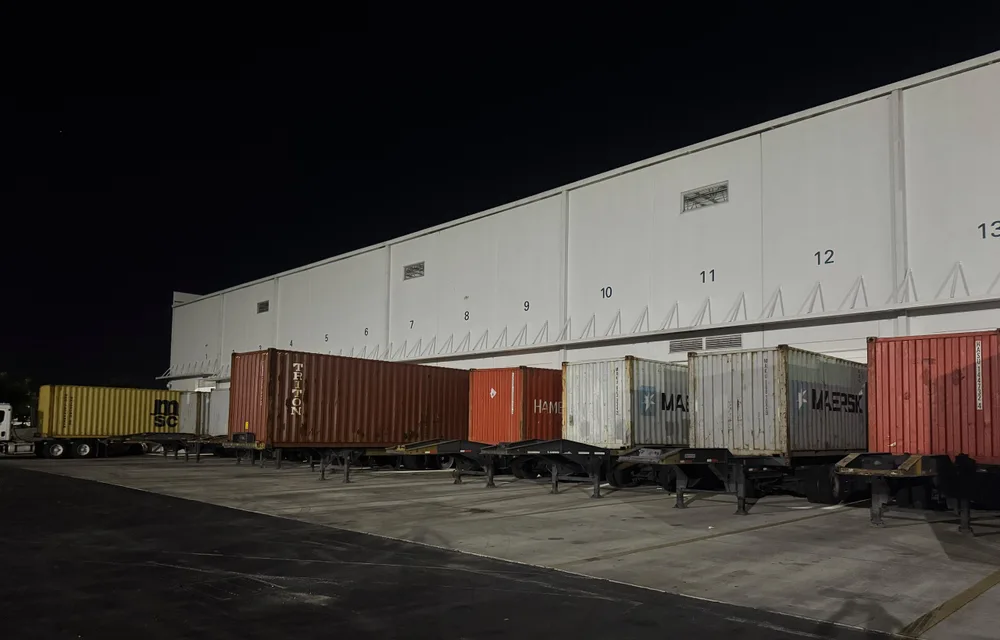
An ocean container is an expensive place to keep freight. Every extra day is per-diem, and every day it sits at the terminal is demurrage. Transloading breaks that clock: the box comes to the Hialeah Gardens dock, the cargo crosses into a domestic trailer, and the empty goes back while your goods are already rolling north.
It is also how three containers become two trailers. Cargo can be restacked and consolidated as it crosses the dock, and on a long lane that saving often pays for the transload by itself. Ask for the math when you call, because it is worth knowing before you decide.
When transloading pays
- The container's free days are nearly gone
- The cargo is going beyond South Florida
- You want to consolidate boxes into fewer trailers
- The receiver takes trailers, not ocean containers
- Import volume is outrunning your carrier's chassis supply
How the transload runs
- Receiving window coordinated with the drayage move
- Cargo crossed dock to dock, counted as it moves
- Restack and consolidation where it saves a trailer
- Outbound loaded, sealed and documented
- Empty released for return the same day where possible
Common questions
Same-day turnaround, really?
Often, when the window is booked ahead and the box is palletized. Floor-loaded cargo adds handling time and we will say so up front rather than promise a window we cannot keep.
Can you load the outbound to my routing?
Yes. Stop-in-sequence loading, specific carton counts per stop, and your labels applied as the freight crosses. Send the routing guide when you book.
Who moves it after the transload?
Our own trucks handle South Florida. For long-haul lanes we load the carrier you name, on the schedule you set.
Call or text
786.897.9186Tell us what is landing and when. You get space, a rate and a receiving window in writing.